
Truist is offering a $400 cash bonus for opening a new checking account and meeting a straightforward requirement: depositing at least $2,000 within the first 60 days. For consumers who were planning to switch banks or open a new account anyway, this promotion essentially rewards you for making a deposit you’d be making regardless. The bonus itself is competitive—a $400 check deposited to your account beats many bank promotions that max out at $200 or $300, and it requires no additional spending or direct deposit commitments beyond the initial $2,000 deposit.
However, like all bank promotions, the fine print matters, and there are specific timing rules, account restrictions, and terms you need to understand before you apply. This bonus is targeted at new Truist checking account customers. Unlike some promotions that let you move money in and out quickly, Truist’s offer typically requires you to maintain the $2,000 deposit for a set period (usually 30 to 90 days, depending on the offer variation) before you can move it elsewhere without triggering forfeiture of the bonus. The bonus itself is deposited as a statement credit or cash deposit within 30 to 60 days of meeting the requirements, though the exact timing depends on Truist’s current promotional terms.
Table of Contents
- WHAT EXACTLY IS THE TRUIST CHECKING ACCOUNT $400 BONUS?
- HOW TO QUALIFY FOR THE $400 TRUIST CHECKING BONUS
- UNDERSTANDING THE $2,000 DEPOSIT REQUIREMENT AND HOLDING PERIOD
- HOW THIS BONUS COMPARES TO OTHER BANK OFFERS
- IMPORTANT LIMITATIONS AND TERMS YOU NEED TO KNOW
- HOW TO CLAIM YOUR BONUS AND TIMELINE EXPECTATIONS
- SHOULD YOU OPEN A TRUIST CHECKING ACCOUNT FOR THIS BONUS?
- Conclusion
WHAT EXACTLY IS THE TRUIST CHECKING ACCOUNT $400 BONUS?
The Truist $400 bonus is a cash incentive paid directly to your checking account once you complete a simple action: deposit $2,000 or more. Truist occasionally runs variations of this offer—sometimes the bonus is $200 or $300, and the deposit requirement might be $1,000 or $3,000—so it’s essential to confirm you’re looking at the current promotion. The $400 version represents one of the stronger offers Truist has run in recent years, making it worth considering if you’re in the market for a new bank.
The promotion typically applies only to new accountholders, meaning you cannot have held a Truist checking account for a certain period (usually 90 days or more) immediately prior to opening the new account. If you’ve banked with Truist before, closed an account, and want to reopen, you may or may not qualify—Truist’s eligibility window varies. For example, if you closed a Truist account six months ago, you might qualify as a “new” customer, but if you closed one two months ago, you likely won’t. Always verify your eligibility directly with Truist before you apply, as banks are strict about this rule and will deny the bonus if you don’t qualify.
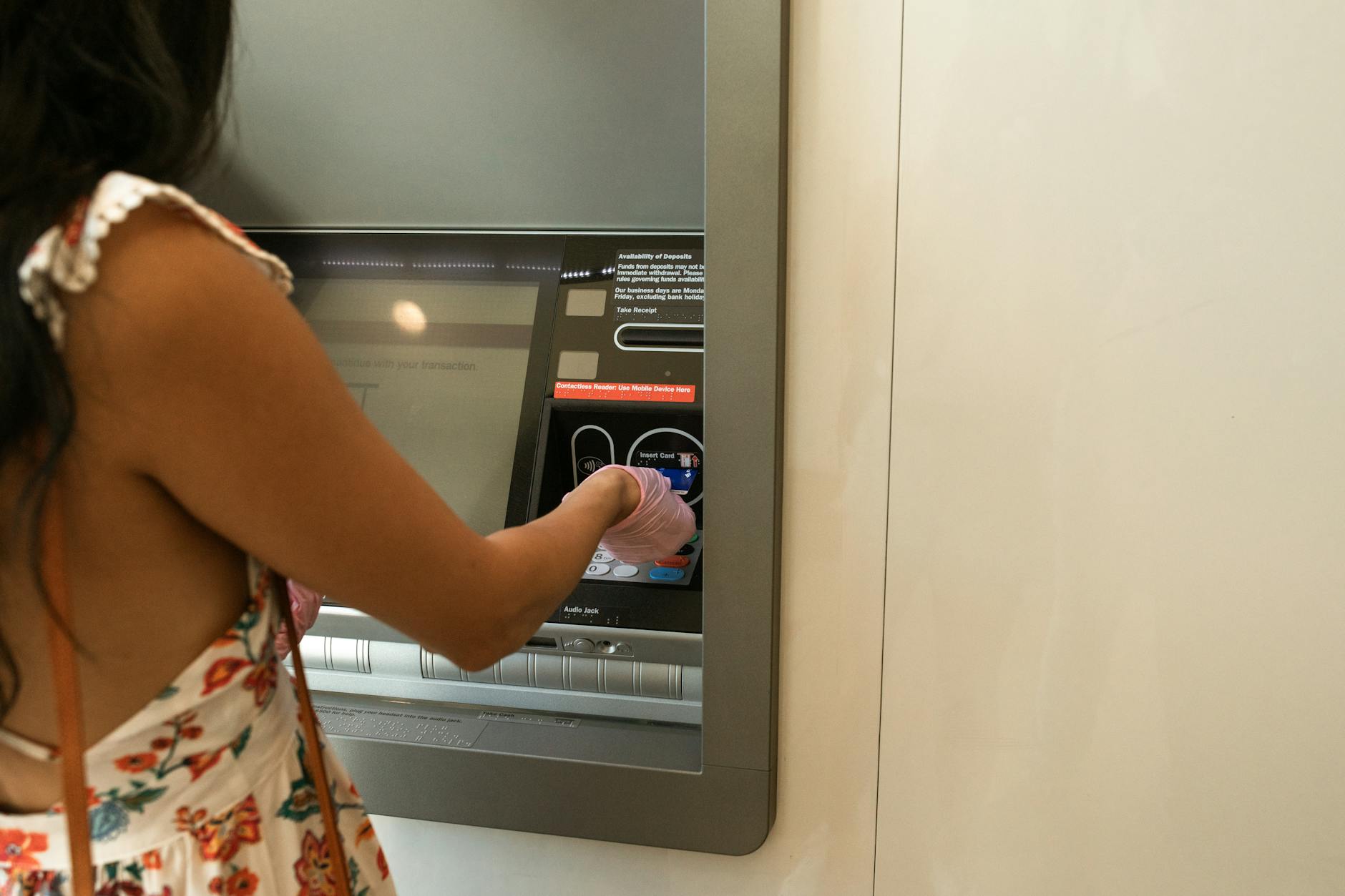
HOW TO QUALIFY FOR THE $400 TRUIST CHECKING BONUS
Qualifying for the $400 bonus is straightforward: open a Truist checking account online or in a branch, and deposit $2,000 within 60 days of account opening. That’s it. No direct deposit is required, no minimum balance to maintain after the 60-day window (outside of any standard account fees), and no ongoing transaction minimums. You can deposit the $2,000 via wire transfer, ACH transfer from another bank, cashier’s check, or any other method Truist accepts. Many customers link their existing bank account to Truist and transfer the funds electronically, which clears within 2 to 3 business days.
The catch is timing. The $2,000 must post to your account within 60 days of opening the account—not 60 days from when you apply. If you open your account on May 1st, your $2,000 deposit must appear in the account by June 30th. Depositing on June 29th counts; depositing on July 1st does not. For customers who take a few weeks to get around to making the transfer, this deadline sneaks up quickly. It’s worth setting a calendar reminder on your phone the day you open the account so you don’t forget and miss the deadline by a few days.
UNDERSTANDING THE $2,000 DEPOSIT REQUIREMENT AND HOLDING PERIOD
The $2,000 deposit itself is not a spending minimum—it’s money that goes into your checking account and remains yours. However, Truist typically requires you to keep that $2,000 (or close to it) in the account for 30 to 90 days from the date of deposit. During this holding period, you cannot withdraw the full amount and close the account without forfeiting the bonus. Some Truist promotions allow you to withdraw parts of it; others require the full amount to stay.
For example, if the terms say “maintain $2,000 for 60 days,” you can spend money from the account and make transfers, as long as the balance doesn’t permanently fall below $2,000 during that 60-day window. After the holding period expires, the funds are entirely yours, and you can withdraw, transfer, or close the account without any penalty. The $400 bonus itself is typically deposited as a statement credit (a direct credit to your account balance) 30 to 60 days after the deposit requirement is met. So the timeline looks like this: Day 1, open account; Day 1–60, deposit $2,000; Day 61–90, hold the deposit and wait for the bonus to post; Day 90–120, you have your bonus and can move your money wherever you want.

HOW THIS BONUS COMPARES TO OTHER BANK OFFERS
Bank bonuses have become more conservative over the past few years. A decade ago, promotions offering $500 or $1,000 were common; today, most banks cap out at $300 to $500. By that standard, Truist’s $400 offer is in the upper tier. However, comparing just the dollar amount ignores the total value. To evaluate whether this deal is worth switching banks, you need to compare three things: the bonus size, the deposit requirement, and the ongoing account quality.
Chase, for instance, frequently runs a $200 to $300 bonus with a $500 to $1,500 deposit requirement and no holding period—you can deposit and withdraw immediately. Bank of America’s offers typically max out at $300 with a $1,500 deposit and 30-day holding period. Ally Bank, an online bank, has offered $50 to $100 bonuses but with minimal deposit requirements and strong interest rates on savings accounts, making the overall value proposition different. If your priority is simply grabbing a fast bonus with minimal commitment, a $300 offer with no holding period might beat Truist’s $400 with a 60- to 90-day hold. But if you’re looking for a bank you’ll actually use long-term and want the highest cash incentive, Truist’s $400 is competitive.
IMPORTANT LIMITATIONS AND TERMS YOU NEED TO KNOW
First, Truist reserves the right to void the bonus if they suspect fraud or if you don’t meet the stated requirements. This means if you deposit $2,000 on Day 45 and withdraw it on Day 46, or if Truist flags the deposit as suspicious (say, because you wire funds from an offshore account), they can deny the bonus. The vast majority of legitimate customers have no issues, but this is a common bank practice, not unique to Truist. Second, the bonus is taxable income. When Truist deposits the $400, you’ll receive a 1099 form, and that $400 is reportable as income to the IRS.
Your tax liability depends on your overall tax situation, but don’t plan as if the bonus is entirely tax-free. Third, Truist’s checking account may have monthly maintenance fees (typically $12 to $15) if you don’t meet certain criteria, such as maintaining a minimum balance or setting up direct deposit. Some Truist checking accounts waive fees if you maintain a $1,500 balance or higher, while premium tiers waive fees across the board. Factor this into your decision: if the account normally costs $12 per month and you only plan to keep it open for six months before closing it, that’s $72 in fees—leaving you with a net gain of just $328 instead of $400. If you’ll keep the account long-term, this isn’t a concern.

HOW TO CLAIM YOUR BONUS AND TIMELINE EXPECTATIONS
The application and deposit process is entirely online or can be done in a Truist branch. Most customers open an account on Truist’s website in about 10 minutes and receive an account number and routing number immediately. Once you have the account number, you can initiate an ACH transfer from your existing bank, or you can visit a Truist branch to deposit cash or a check. The $2,000 must post (not just be initiated) within 60 days. ACH transfers typically post within 2 to 3 business days, so there’s no need to rush—as long as you initiate the transfer by Day 57, you’ll be fine.
After the deposit posts, you’ll need to wait for Truist to process the bonus. This usually takes 30 to 60 days. Truist will notify you when the bonus has been credited to your account. Some customers see the bonus within 10 to 15 days; others wait the full 60 days. Set expectations for the longer timeline so you’re not surprised. Once the bonus appears in your account, verify that it’s there before assuming everything is complete.
SHOULD YOU OPEN A TRUIST CHECKING ACCOUNT FOR THIS BONUS?
The answer depends on two factors: whether you need a new checking account, and whether you’ll be happy with Truist’s service. If you’re already content with your current bank and only interested in the $400 bonus, ask yourself: is $400 (or $328 net of fees, or less if you owe taxes on it) worth the hassle of opening a new account, moving money around, and managing two accounts for several months? For some people, it absolutely is. For others, the effort isn’t worth the payoff. If you were planning to switch banks anyway—because your current bank charges high fees, offers poor customer service, or lacks the features you want—then Truist’s promotion is a nice bonus on top of a decision you were going to make regardless.
Truist is a legitimate regional bank with competitive checking and savings products, reasonable fees, and a decent mobile app. It’s not the best bank on the market, but it’s solid. The bonus itself is a short-term incentive, but your decision to open the account should be based on whether you’ll actually use and be happy with the account long-term. If you decide Truist isn’t for you after a few months, you can close the account after the holding period expires and keep the $400—there’s no penalty for closing. Read reviews of Truist’s checking account and test their customer service before you commit to ensure you’re opening an account at a bank you’ll tolerate for at least a few months.
Conclusion
Truist’s $400 checking account bonus is a legitimate offer that rewards new customers for depositing $2,000, and it’s competitive compared to most bank promotions available today. The requirements are simple—deposit $2,000 within 60 days and maintain it for 30 to 90 days—and you’ll receive the bonus as a statement credit within 60 days of meeting the requirement. The key to maximizing this offer is understanding the holding period, accounting for any monthly account fees, and recognizing that the bonus is taxable income.
The real question isn’t whether the $400 is a good bonus (it is), but whether Truist is the right bank for you. If you’ve been considering switching to Truist anyway, this bonus makes the decision easier. If you’re switching banks purely for the money, make sure the account itself meets your banking needs—otherwise, you’ll spend more in fees and frustration than the $400 is worth. Compare Truist’s account features, customer service ratings, and fee structure to your current bank before you apply, and set calendar reminders for the key deadlines so you don’t miss the promotion window.
You Might Also Like
- PNC Simple Checking $100 Bonus With Low Deposit Requirement
- Wells Fargo Everyday Checking $325 Bonus March 2026 With $1,000 Deposit
- SoFi Checking and Savings Up to $400 Bonus March 2026 Direct Deposit Strategy