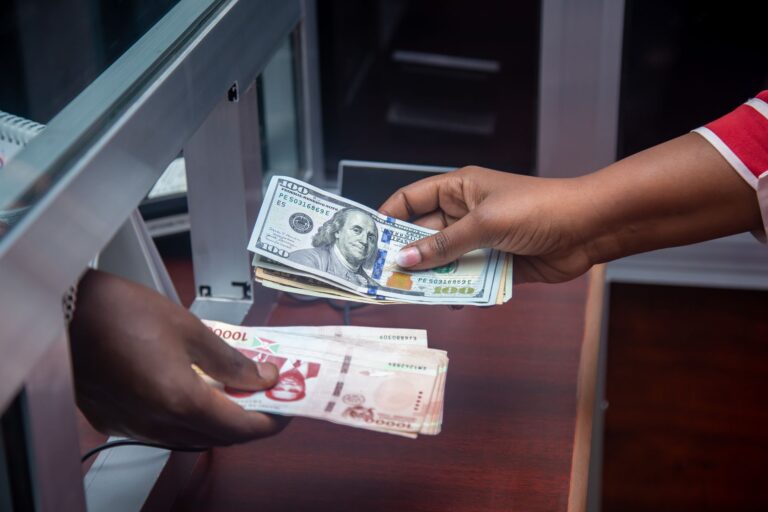

Bank account bonuses are one of the most straightforward ways to earn money from your savings, with many institutions offering $100 to $2,500 promotions simply for opening an account and meeting modest requirements like maintaining a minimum balance or setting up direct deposits. These bonuses function as an immediate cash incentive separate from interest earnings—a one-time payment that appears after you satisfy the account’s conditions, typically within 30 to 90 days. Beyond the signup bonus, high-yield savings accounts currently offer annual interest rates between 4.0% and 5.35%, turning regular deposits into meaningful earnings as long as rates remain elevated.
The strategy combines two distinct income sources: the lump-sum promotional bonus and the ongoing daily interest accrual on your balance. A typical path involves opening a checking account with a $300 bonus after receiving a qualifying direct deposit, then moving excess funds into a high-yield savings account earning 5.0% APY. Over one year, that $10,000 would generate approximately $500 in interest alone, plus your initial $300 bonus—total earnings of $800 with minimal effort and no investment risk.
Table of Contents
- What Types of Bank Bonuses Are Currently Available?
- How Direct Deposits and Minimum Balances Trigger Bonus Payouts
- Timing Multiple Bonuses Across Different Banks
- Comparing Bank Bonuses Against High-Yield Savings Account Interest
- Avoiding Common Pitfalls That Eliminate Your Bonus
- Leveraging High-Yield Savings Accounts Beyond the Bonus
- Advanced Strategy—Cash Back Checking Combined With Savings
What Types of Bank Bonuses Are Currently Available?
bank bonuses fall into two main categories: checking account promotions and savings account incentives. Checking account bonuses typically range from $100 to $500 and require actions like setting up a direct deposit of at least $250 per paycheck, maintaining an account for 60 to 90 days, or completing a specified number of debit card transactions. Savings account bonuses are less common but sometimes appear for opening high-yield savings or money market accounts, though these often come with much higher minimum balance requirements—sometimes $25,000 or more—making them less accessible to average savers.
The most aggressive offers currently come from regional and online banks rather than major national chains. Chase, Bank of America, and Wells Fargo typically offer $100 to $300 promotions with straightforward requirements, while online banks like Marcus, Ally, and Capital One 360 compete by combining smaller bonuses ($40 to $200) with much higher ongoing interest rates (4.5% to 5.2% APY). The trade-off is clear: a major bank’s higher bonus plus lower interest (0.01% APY) versus an online bank’s lower bonus paired with interest rates 500 times higher. A $10,000 deposit in a traditional bank’s savings account earning 0.01% generates $1 per year; the same amount in a 5% online account generates $500 annually.
How Direct Deposits and Minimum Balances Trigger Bonus Payouts
Most checking account bonuses require a qualifying direct deposit—typically $500 to $2,000 within 30 to 60 days—before the bank deposits the promotional bonus into your account. A “qualifying” direct deposit must come from an employer, government agency, or payroll service; it cannot be generated by transferring money between your own accounts. This requirement filters out people who are self-employed, retired, or living on investment income without regular paychecks. Many banks also impose minimum balance requirements to avoid monthly maintenance fees and protect the bonus.
Some require you to maintain that minimum balance for 60 days after the bonus posts, meaning if you open an account with a $300 bonus but your balance drops below the required threshold before that period ends, the bank may claw back the bonus from your account. A real-world example: Chase requires a $500 minimum balance on many checking accounts to avoid a $12 monthly fee. If you open the account, receive your bonus, then withdraw to $100 to test this rule, you’ll face $12 monthly fees and may lose bonus eligibility within weeks. The fine print typically states that accounts must remain open for a set period—often 90 days to six months—or the bank can reverse the bonus entirely.
Timing Multiple Bonuses Across Different Banks
people who pursue “bank bonus churning” systematically open accounts at different institutions to capture multiple bonuses over a year. The practice is legal and banks expect it, but it requires meticulous tracking of eligibility windows and timing. Most banks allow you to claim a bonus only once per account type every 12 to 24 months. Chase enforces its “24-month rule”: you can claim its checking bonus only if you haven’t received one from Chase in the past 24 months.
This creates a realistic capacity of claiming roughly five to six bonus-eligible accounts per year if you stagger the timing correctly. Successful bonus chasers maintain a spreadsheet tracking which banks they used, when the bonus posted, when the 24-month window closes, and which accounts have already been churned. A practical example: January 2025, open Chase checking ($300 bonus); March 2025, open Chase savings ($200 bonus, if available); June 2025, open Ally checking ($100 bonus); September 2025, open Marcus savings ($50 bonus); December 2025, open Capital One 360 checking ($200 bonus). Total earnings: $850 in bonuses plus approximately $600 to $800 in interest accrued on the rotating balances. The downside is administrative burden—monitoring multiple accounts, ensuring minimum balances are maintained across all of them, and remembering which ones are scheduled to be closed or maintained long-term.
Comparing Bank Bonuses Against High-Yield Savings Account Interest
The math between bonuses and interest rates shifts depending on your account size and time horizon. For someone with $5,000 to deposit, a $300 bonus is equivalent to 6% return on that money in year one (if earned immediately), while a 5% APY savings account generates $250 in interest that same year—total $550 in earnings. For someone depositing $50,000, the same $300 bonus represents only 0.6% return, but the interest earnings rise to $2,500, making the ongoing rate far more valuable than the promotional bonus. This reveals the tradeoff: bonuses favor smaller savers and lump-sum depositors, while interest rates favor people with larger balances or long-term holdings. Banks know this math, which is why online institutions with the highest rates (4.5% to 5.35% APY) often offer the smallest bonuses.
Ally Bank offers 4.8% APY on savings but only a $50 to $100 bonus depending on account type. Marcus by Goldman Sachs currently offers 4.75% APY with no bonus at all. This is the reverse strategy of traditional banks like Chase, which offer a $300 bonus but 0.01% APY—the incentive is to pull in new customers, then hope they’re too lazy to move money elsewhere when the promotional period ends. The practical decision: if you have $20,000 to save long-term, a high-yield savings account with 5% APY will generate $1,000 per year in interest, far exceeding any one-time bonus. If you have $2,000 and need the cash in six months, the $300 bonus may matter more than interest you’d earn at 5% ($50 in six months).
Avoiding Common Pitfalls That Eliminate Your Bonus
One frequent mistake is misunderstanding what counts as a “direct deposit.” Banks define direct deposits very specifically—payroll, government benefits like Social Security or unemployment, or pension payments. Transferring money from another account you own, receiving a check you deposit yourself, or getting a wire transfer from a friend does not qualify. The bank will reject the deposit as non-qualifying, the required direct deposit never posts, and your account fails to meet the bonus condition. You’ll have no bonus, no recourse, and an open account you may want to close. Another trap is triggering the minimum balance trap.
Banks state the minimum requirement clearly in disclosures, but the timing of when balances are checked varies. Some check the balance on the final day of each month; others check daily. If your bonus requires a $500 minimum for 60 days but you drop to $400 on day 61 because you forgot, you may lose monthly fee waivers and accumulated interest bonuses. Worse, some banks claw back the promotional bonus if the account ever dipped below minimum during the required holding period—you don’t see this happen immediately; the reversal appears weeks later. One case study: a person opened a Bank of America checking account in January for a $300 bonus, maintained the required $1,500 minimum for the stated 60-day period, then the bonus posted in March. However, they dropped below $1,500 in April because of regular spending, received monthly fees all year, and when they checked their bonus status in December, it had been reversed in April due to a clause in the fine print stating the minimum had to be maintained for six months, not 60 days.
Leveraging High-Yield Savings Accounts Beyond the Bonus
Once you’ve captured bonuses and built up savings, the bulk of your earnings shift to ongoing interest rates. High-yield savings accounts from online banks are currently paying 4.5% to 5.35% APY with no monthly fees, no minimum balance (or minimums under $1,000), and FDIC insurance up to $250,000. These accounts function identically to traditional savings accounts—funds are accessible within one to three business days—but pay 300 to 500 times more interest. A person who moves $15,000 into a 5% high-yield savings account earns $750 per year, roughly equivalent to two to three bank bonuses.
The practical advantage is flexibility without penalty. Unlike bonuses, which vanish if you close an account early or fail hidden requirements, interest accrues continuously as long as the money sits there. You can shift rates by moving to a new bank if rates fall, and you face no clawback or reversal. Rates are variable and can drop—many high-yield accounts were paying 5.3% in late 2023, fell to 4.5% by mid-2024, and have stabilized around 4.75% to 5.2% in 2025 and early 2026. If the Fed cuts interest rates further, the 5% accounts may fall to 3% or lower, at which point the bonus incentive becomes more valuable again.
Advanced Strategy—Cash Back Checking Combined With Savings
Some online banks offer tiered checking accounts that combine cash-back rewards with high savings rates, creating additional earnings layers. Ally Bank, for instance, offers 3.0% APY on checking up to $15,000 (so up to $450 per year on the full amount) and 4.8% APY on savings. A person keeping $15,000 in the checking account and $50,000 in savings earns $450 + $2,400 = $2,850 per year without touching a single bonus. Charles Schwab’s investor checking account offers cash back on out-of-network ATM fees and zero monthly minimums, though it doesn’t feature a promotional bonus.
These accounts have stricter eligibility or require maintaining higher balances, but for someone who already has significant savings, they eliminate the bonus-seeking treadmill and substitute steady, tier-based earnings. The example: a freelancer with $100,000 in savings places $15,000 in Ally checking (earning 3%), $30,000 in Ally savings (earning 4.8%), and keeps the remaining $55,000 in a money market fund earning 5.2%. Total annual earnings: $450 + $1,440 + $2,860 = $4,750, all from interest and no bonuses or chasing required. This strategy only works if you have capital to set aside and discipline to not raid these accounts for lifestyle spending, but it demonstrates that bonuses are the entry point, not the entire strategy.
- —